Bailiff, Leaders in Diverse Atmospheric Liquid Storage
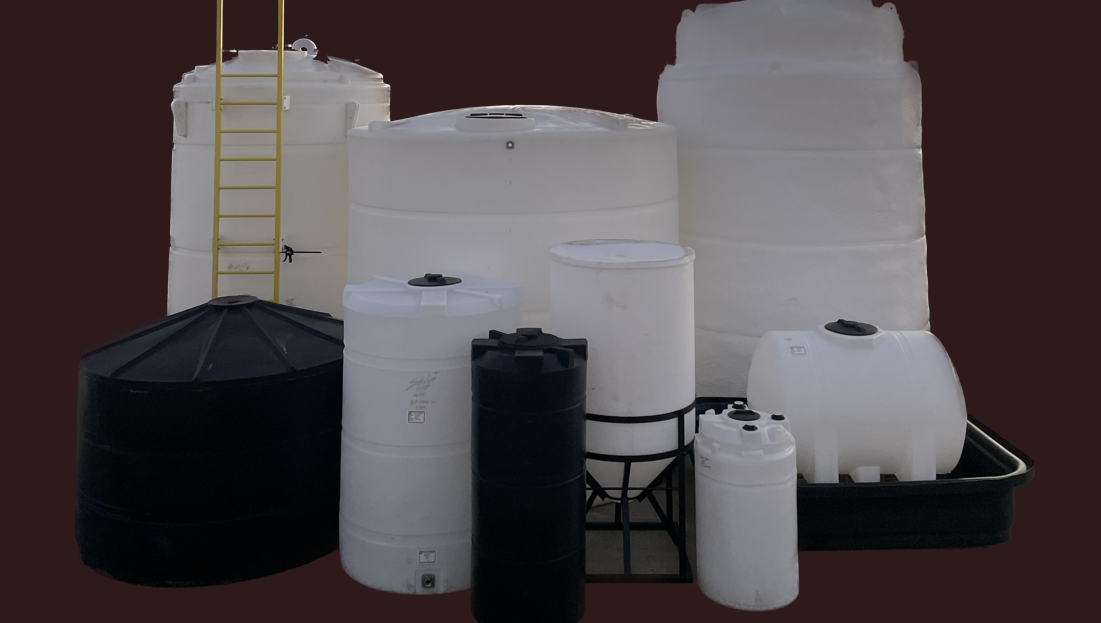
Liquid storage can be classified into two main categories: pressurized and atmospheric pressure storage. Bailiff Enterprises has no interest at the moment in storing liquid in a pressurized state as we are focused on fully developing a line of storage containers that make storing a wide range of liquids possible. Our current lineup consists of Polypropylene, PVDF/Kynar, and Polyethylene. These three plastics can be molded in very large tanks/containers, making us capable of manufacturing tanks for a wide range of liquids.
High-Density Polyethylene (HDPE) Liquid Storage
HDPE is a top choice for atmospheric liquid storage due to its excellent resistance to impact and chemicals. This versatile polymer is lightweight yet strong, making it ideal for tanks and containers. Additionally, HDPE is known for its durability in harsh environments and its ability to handle a range of liquids, from water to various industrial chemicals. HDPE is our bread and butter, as we have molded parts in HDPE since 1981. The requirement/recommendation for all atmospheric tanks is to have a vent at least one pipe size larger than the largest inlet or outlet, sized for the maximum fill and pump-out rates, so that atmospheric pressure is maintained.
The Benefits of Polypropylene
Polypropylene, being another robust polymer, possesses a high resistance to chemical exposure and has a significant tolerance for heat. The Polypropylene we use, RMPP141, is known for handling heat up to 200 degrees F. The downfall is that the polymer/tank tends to crack on impact at freezing temperatures. This can be combated by using a heat trace element and insulation. That matters most for sodium hydroxide (caustic soda), which thickens and can crystallize at low temperatures at common strengths such as 50%, so it needs to be kept warm. Polypro can also be considered for other liquids that HDPE is not well suited for.
The investment plastic: PVDF/Kynar
Polyvinylidene fluoride (PVDF) is an exceptional material for atmospheric liquid storage due to its outstanding chemical resistance, durability, and thermal stability. Unlike other plastics, PVDF can withstand exposure to a wide range of aggressive chemicals, including most acids, halogens, oxidizers, and many solvents, making it ideal for industries handling corrosive substances. PVDF is not recommended for strong bases such as concentrated sodium or potassium hydroxide, or for ketones, esters, and amines such as acetone and ethyl acetate.
Additionally, PVDF has excellent UV and weather resistance, ensuring long-term performance in outdoor storage applications without degradation from sunlight or environmental factors. Its high purity and low permeability make it a preferred choice for industries such as pharmaceuticals, water treatment, and specialty chemicals, where contamination must be minimized.
With their superior mechanical strength and longevity, PVDF storage tanks provide a reliable and cost-effective solution for safely containing liquids under atmospheric conditions, reducing maintenance costs, and enhancing operational efficiency.
Find a link to the specific Kynar resin we use here (also comes in black): https://hpp.arkema.com/en/products/product/f/flup_hpp_Kynar/p/kynar-flex-2850-wr-powder/