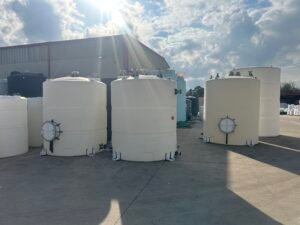

Polypropylene Vessels: Durability & Temperature Compatibility
What Is a Rotomolded Polypropylene Vessel?
The world of rotomolded tanks has been dominated by two plastics, HDPE (high-density polyethylene) and XLPE (cross-linked polyethylene). Both cover a wide range of liquids, but the rotomolding industry has had few options for higher temperatures and certain chemicals. Polypropylene helps fill that gap.
Where Polypropylene Fits
In many applications polypropylene performs as durably as polyethylene, and it can be a better choice for chemicals such as sodium hydroxide (caustic soda) and low-percentage nitric acid (see PVDF tanks for higher percentages). Chemical resistance always depends on the chemical, its concentration and the temperature, so each application should be reviewed before a tank is specified.
Temperature
Bailiff polypropylene tanks are rated for service up to approximately 200°F (93°C), whereas HDPE is normally limited to about 140°F. The actual limit for a given tank depends on the chemical, concentration, tank design and liquid level.
When to Choose a Polypropylene Vessel
If you need consistently higher temperatures, polypropylene is worth reviewing. If you want to know more about polypropylene, give us a call. If you are interested in the resin we use, find it here: PSD Rotoworx RMPP141 Natural data sheet.