Sodium Hypochlorite Storage Tanks for Water Treatment
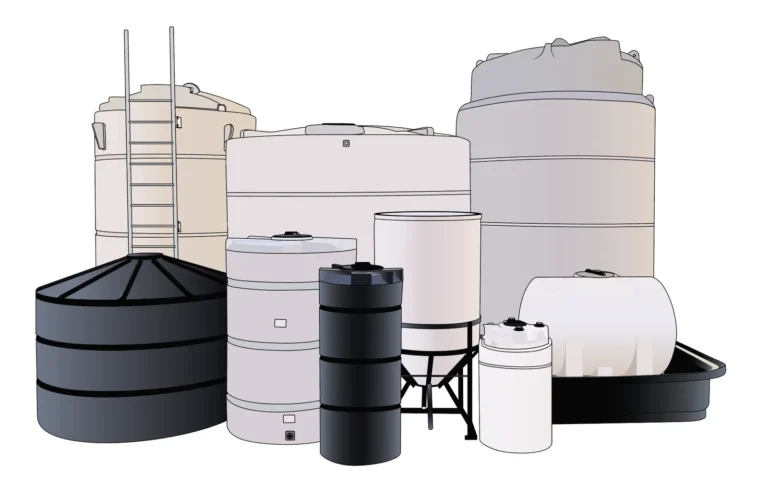
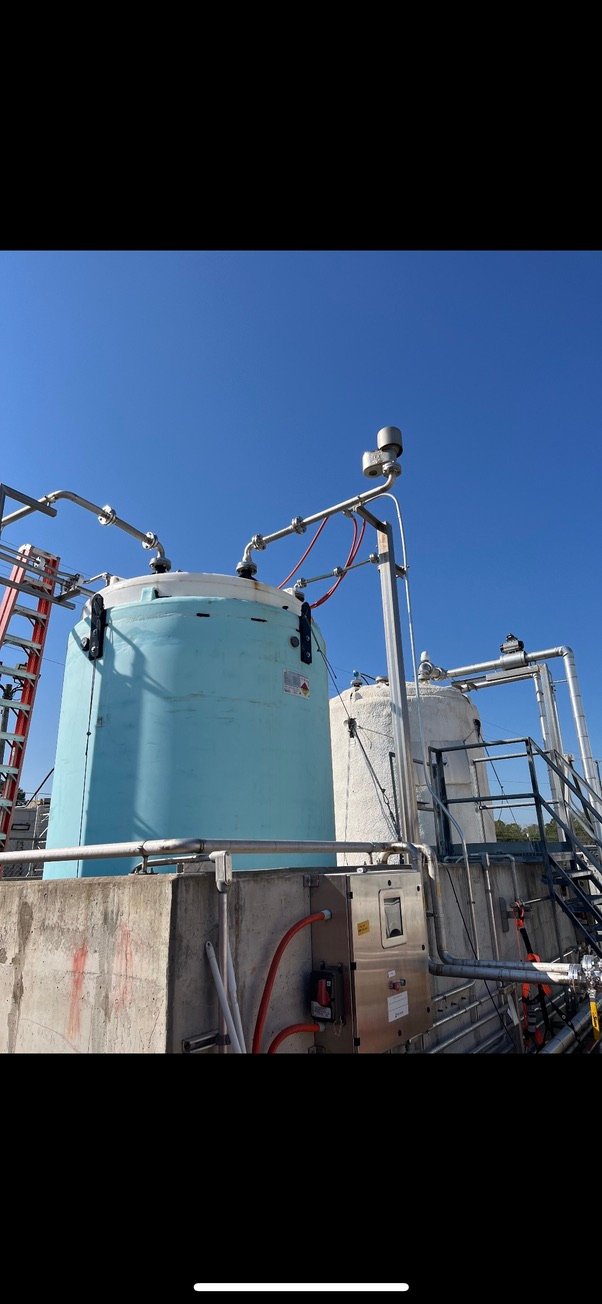
Sodium hypochlorite storage tanks hold liquid bleach for water treatment, wastewater disinfection and chemical distribution. Bailiff Enterprises, Inc. manufactures rotationally molded HDPE, polypropylene and PVDF bleach tanks in Willis, Texas, and ships nationwide. Most trade-strength bleach (about 10% to 15%) is stored in HDPE. The right tank also depends on concentration, temperature, light exposure, fittings and containment.
Which material works best for sodium hypochlorite storage?
All three Bailiff resins are rated for bleach on our chemical compatibility chart. The difference is cost, temperature and how hard the service is.
| Material | Sodium hypochlorite under 20% | Sodium hypochlorite (100% chart row) | Where it fits |
|---|---|---|---|
| HDPE (Dow RESILITY™ DPDB-3220 NT 7) | Excellent | Good | Most municipal and industrial bleach storage at ambient temperature. Lowest cost. |
| Polypropylene (PSD Rotoworx RMPP141 Natural) | Excellent | Good | Warmer service, or when the system is already built in polypropylene. |
| PVDF (Arkema KYNAR FLEX® 2850 WR) | Excellent | Excellent | Severe or high-value service where long life matters more than first cost. |
Ratings are for the tank material only. Gaskets, valves, pumps and piping must be checked separately. A general chart is a guide, not final approval for a specific tank.
Why bleach is hard on storage systems
Sodium hypochlorite breaks down over time. Heat, sunlight and metal contamination speed that up. As it breaks down, it loses strength and releases oxygen gas. The Chlorine Institute’s Pamphlet 96, the Sodium Hypochlorite Manual, is the industry reference for bleach storage, compatible materials and stability.
- Light: natural-color HDPE is translucent, so you can see the level. Black HDPE blocks light, but black availability varies by tank size, so ask when you request a quote. Outdoor bleach tanks also benefit from shading.
- Heat: keep the tank out of direct sun where you can. Warm bleach loses strength faster.
- Metals: keep copper, nickel, iron and their alloys out of wetted parts. They speed up breakdown.
- Venting: the tank must vent freely. Route the vent so off-gas does not collect in a building or near people.
Fittings for high-concentration bleach
For sodium hypochlorite service, Bailiff’s fabrication procedure uses mechanical sidewall fittings. We do not plastic-weld on wetted sidewall surfaces of a bleach tank. Flanged connections are ANSI 150. Tell us your pump, piping and gasket materials so the fitting schedule matches your system. Support piping independently so it does not load the tank wall.
Sizes and specific gravity
Bailiff standard HDPE tanks run from 550 to 10,000 gallons. Polypropylene tanks run from 10 to 10,000 gallons, and PVDF from 10 to 5,000 gallons. Trade-strength bleach weighs roughly 1.2 specific gravity. Bailiff’s standard tank rating is 1.9 SG, which leaves a large weight margin. SG covers weight only; chemical and temperature suitability are separate checks. Every tank is water-tested before it ships. Upright HDPE tanks are manufactured to ASTM D1998 where it applies.
Bulk bleach containment
A leak of bleach can damage concrete and react with nearby acids. Keep bleach containment separate from acid storage. Bailiff offers double-wall tanks and separate containment basins. Containment requirements vary by jurisdiction and project specification, so confirm the required secondary capacity with your authority having jurisdiction.
Water treatment buyers: NSF/ANSI/CAN 61
Many municipal specifications call for NSF/ANSI/CAN 61. Bailiff’s HDPE resin is NSF-approved, but finished Bailiff tanks are not yet NSF/ANSI/CAN 61 certified. Resin approval and finished-tank certification are different things. If your specification requires finished-tank certification, tell us at the start of your quote.
What to send for a sodium hypochlorite tank quote
- Bleach concentration and supplier SDS
- Working volume and delivery size (tote, bulk truck)
- Indoor or outdoor, and minimum and maximum temperatures
- Fill, suction, drain, vent, overflow and level instrument locations
- Pump, piping and gasket materials
- Single wall, double wall or separate containment
- Seismic or wind requirements, if any
- Quantity, destination and required date
Frequently asked questions
Is HDPE good for sodium hypochlorite?
Yes. On Bailiff’s chart, HDPE rates Excellent for sodium hypochlorite under 20% and Good on the 100% row. It is the most common choice for ambient bleach storage.
Why does stored bleach lose strength?
Sodium hypochlorite naturally breaks down. Heat, sunlight and metal contamination make it happen faster. A shaded, opaque tank with no metal wetted parts helps slow it down.
Can a bleach tank be pressurized?
No. Bailiff tanks are atmospheric and must vent freely.
Can bleach and acid share containment?
No. Bleach mixed with acid releases chlorine gas. Keep them in separate containment.
Are Bailiff bleach tanks NSF 61 certified?
Not yet. The HDPE resin is NSF-approved, but finished Bailiff tanks are not yet NSF/ANSI/CAN 61 certified.
Further reading
Request a Sodium Hypochlorite Tank Quote
Send your product specification, operating temperature, working volume, required drawings, fitting schedule, containment details and delivery location. Bailiff Enterprises, Inc. manufactures atmospheric industrial plastic tanks in Willis, Texas and serves customers nationwide.
General guidance only. Confirm suitability for your chemical, temperature and installation with Bailiff before purchase.