Semiconductor Chemical Storage Tanks for Fabs and CDU OEMs
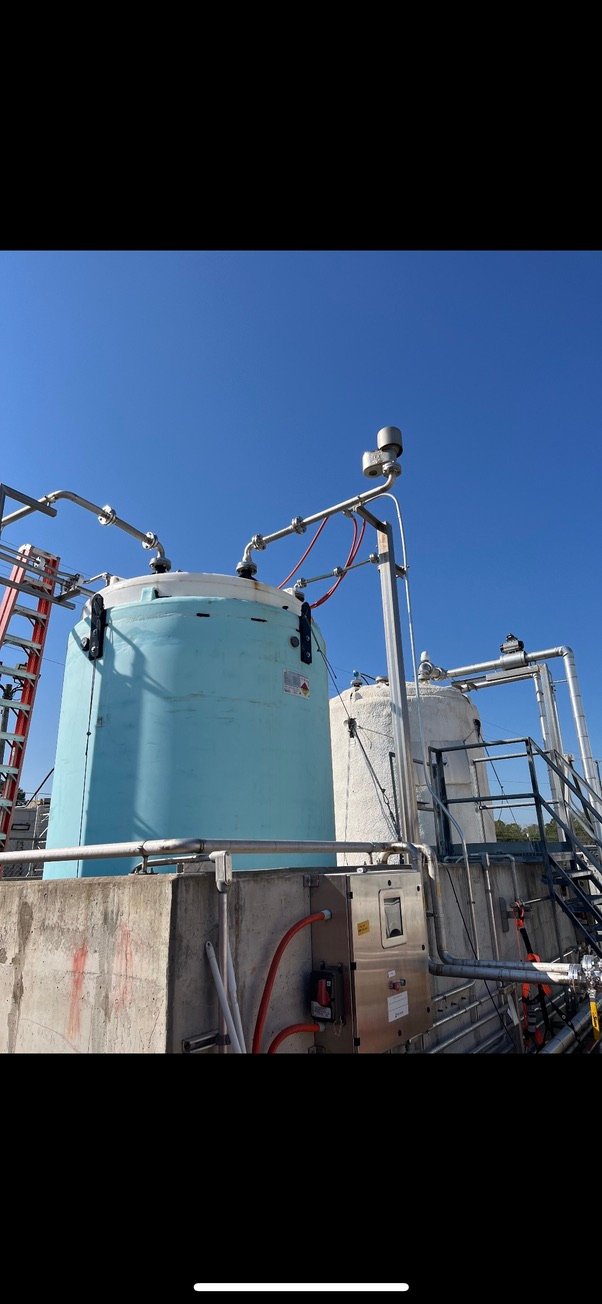
Semiconductor chemical storage tanks hold acids, bases, oxidizers and wastewater in fabs and in the equipment that supplies them. Bailiff Enterprises, Inc. manufactures rotationally molded PVDF, polypropylene and HDPE tanks in Willis, Texas, for bulk chemical storage, day tanks, neutralization systems and waste collection. Bailiff tanks fit the bulk and facility side of the fab. Ultra-high-purity point-of-use systems have separate purity rules, covered below.
Where Bailiff tanks fit in a fab
- Bulk acid and caustic storage
- Day tanks and intermediate tanks feeding chemical delivery units
- Acid waste and HF waste collection
- Wastewater neutralization and pH adjustment
- Scrubber recirculation tanks
- Tanks built into OEM skids, with repeat configurations
On this page, CDU means chemical delivery unit, not the coolant distribution unit used in data-center cooling.
Bulk storage vs. ultra-high-purity service and SEMI F57
SEMI F57 is the industry specification for polymer materials and parts used in ultrapure water and liquid chemical distribution. It limits metal, ion and organic contamination that can leach from wetted surfaces. Arkema lists Kynar® PVDF as a resin family used in semiconductor piping, wet benches and tanks.
A high-purity resin alone does not make a finished tank high-purity. Molding, welding, cleaning and packaging all matter. Bailiff does not represent its standard tanks as SEMI F57-qualified or cleanroom-manufactured. If your project needs special cleaning, packaging or leach-test documentation, list it in your RFQ and we will tell you up front what we can provide.
Some equipment specifications require a PFA- or PTFE-lined tank. An unlined HDPE, polypropylene or PVDF tank is not equivalent to a lined tank unless the project’s engineer approves the substitution in writing.
Material selection for common fab chemicals
Ratings below are from Bailiff’s chemical compatibility chart for the tank material only. A general chart is a guide, not final approval for a specific tank.
| Chemical | HDPE | Polypropylene | PVDF |
|---|---|---|---|
| Hydrofluoric acid 49% | Excellent | Excellent | Excellent |
| Hydrofluoric acid 70% | Good | Fair | Excellent |
| Sulfuric acid 10% to 75% | Excellent | Excellent | Excellent |
| Sulfuric acid 75% to 93% | Good | Fair | Excellent |
| Nitric acid 20% | Good | Excellent | Excellent |
| Nitric acid 50% | Severe effect | Good | Excellent |
| Hydrochloric acid 37% | Excellent | Fair | Excellent |
| Hydrogen peroxide 30% | Excellent | Good | Excellent |
| Ammonium hydroxide | Excellent | Excellent | Excellent |
PVDF covers the widest range on this list. Polypropylene and HDPE rate Excellent for several of these chemicals at lower cost. For strong bases, amines (including developers such as TMAH), solvent blends and hot service, check the resin maker’s data before choosing PVDF.
PVDF tank sizes and temperature
Bailiff molds PVDF tanks from 10 to 5,000 gallons using Arkema KYNAR FLEX® 2850 WR. For temperature limits, Bailiff uses Arkema’s chemical resistance chart for KYNAR FLEX® 2850. That chart lists up to 230°F for many chemicals, and the limit for your chemical may be lower. It is resin data, not a finished-tank service rating, so the limit for your tank is confirmed on the quote. Polypropylene tanks run from 10 to 10,000 gallons. Bailiff makes its 1,550- and 2,500-gallon double-wall tanks in house, and those sizes can be built in polypropylene or PVDF.
Fabrication and fittings
Bailiff’s fabrication shop installs nozzles, manways, bottom drains, vents and instrument connections to your schedule. Flanges are ANSI 150, and tanks are atmospheric. A handful of DVS-certified plastic welders are on staff. Every tank is water-tested before it ships.
Containment and fab safety
Fabs usually require secondary containment for acid and caustic storage. Bailiff offers double-wall tanks and containment basins. Keep incompatible chemicals, such as acids and bases or oxidizers and organics, in separate containment. Confirm sizing rules with your authority having jurisdiction and your fab’s EHS team.
What to send for a semiconductor tank quote
- Chemical, concentration and SDS
- Minimum and maximum operating temperatures
- Purity requirement (bulk, waste or high-purity)
- Working volume and footprint or height limits
- Nozzle schedule with sizes, orientation (clockwise) and elevations
- Instrumentation and venting requirements
- Containment type
- Seismic requirements and site location
- Quantity and whether the configuration will repeat
Frequently asked questions
Is PVDF required for every semiconductor chemical?
No. Bailiff’s chart rates polypropylene and HDPE Excellent for several common fab chemicals, including 49% hydrofluoric acid, 10% to 75% sulfuric acid and ammonium hydroxide. Choose by chemical, concentration, temperature and purity need.
Are Bailiff tanks SEMI F57 certified?
Not unless your quote says so. Tell us if your application needs SEMI F57 components.
Can Bailiff build tanks for chemical delivery unit OEMs?
Yes. Bailiff builds custom fitting layouts and can repeat an approved configuration for ongoing orders.
Can the tanks hold pressure?
No. Bailiff tanks are atmospheric. Pressure service needs a separate pressure-rated vessel.
Further reading
Request a Semiconductor Chemical Storage Tank Quote
Send your product specification, operating temperature, working volume, required drawings, fitting schedule, containment details and delivery location. Bailiff Enterprises, Inc. manufactures atmospheric industrial plastic tanks in Willis, Texas and serves customers nationwide.
General guidance only. Confirm suitability for your chemical, temperature and installation with Bailiff before purchase.